

Your Home's First Showing Happens Online: Why Presentation Matters Before Buyers Ever Walk Through the Door
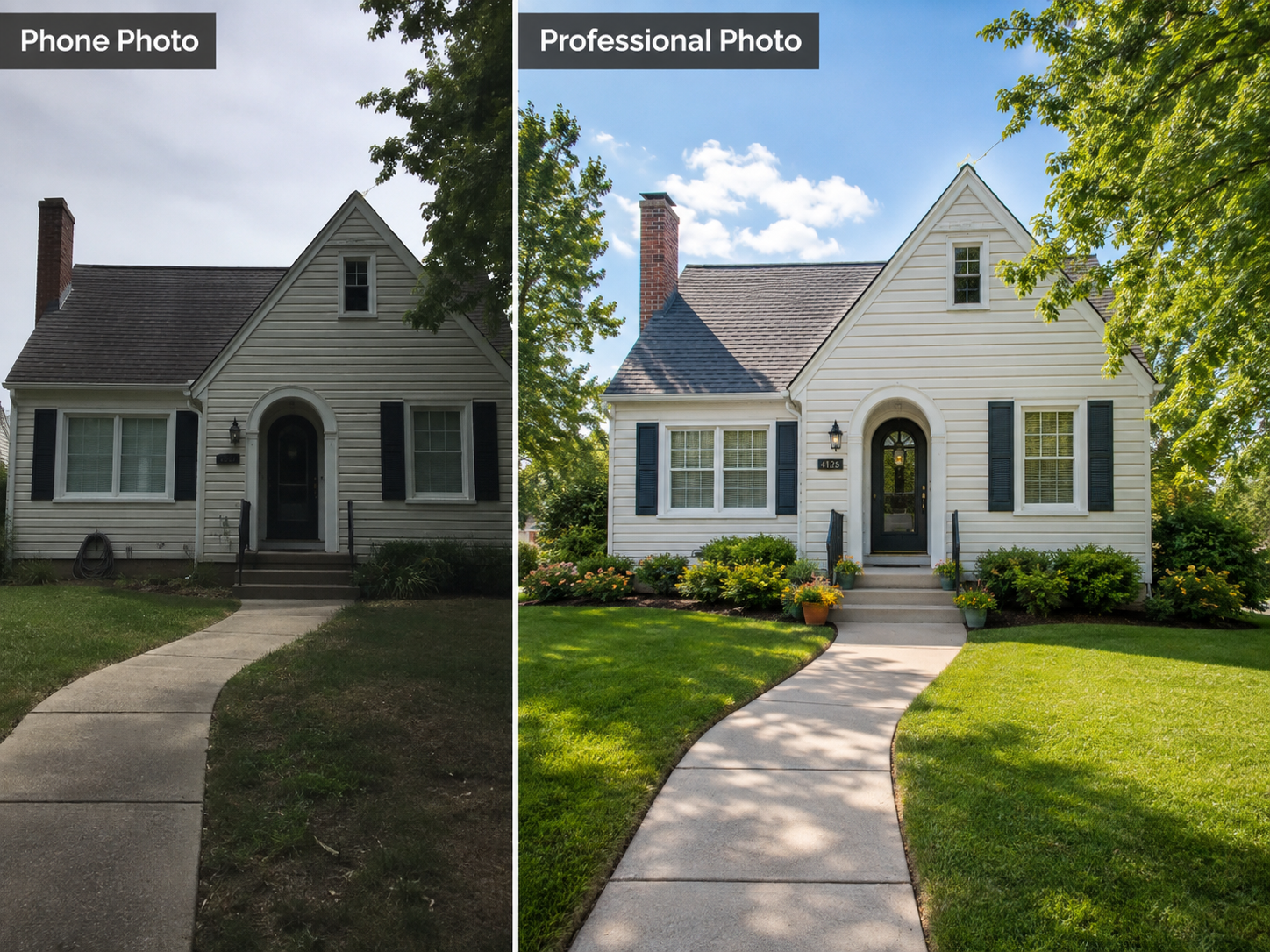
When homeowners prepare to sell, much of the attention naturally goes toward what buyers will see when they arrive for a showing: clean rooms, bright lighting, an attractive kitchen, fresh bathrooms, and a home that feels welcoming.
Those things absolutely matter. But there is another important point sellers sometimes overlook: your first showing usually happens before the buyer ever steps inside your home.
It happens online. Before a prospective buyer pulls into the driveway, they have already looked through the photographs, studied the kitchen, compared the home with competing properties, and decided whether it deserves a place on their showing schedule.
Professional Photography Makes a Difference
 Real estate photography is not simply about making a home look attractive. The photographs help determine whether buyers want to learn more about the property at all.
A professionally photographed home should appear bright, properly framed, inviting, and representative of the space. Poor photographs can have the opposite effect. Dark rooms, crooked angles, cluttered countertops, closed blinds, awkward framing, and distracting objects can make a perfectly good home appear smaller, darker, or less appealing than it really is.
Professional photography cannot solve every problem, however. A photographer can choose a better angle and properly expose a room, but the best results begin with a home that has already been prepared.
Before listing your home, ask your real estate agent whether they will be using a professional real estate photographer. Do not simply assume professional photography is part of the marketing plan. Ask who will be taking the photographs and how your property will be presented online. Since the photographs are often a buyer's first introduction to your home, this is an important part of the listing process.
Landscape (Horizontal) vs. Portrait (Vertical) Photos Matter
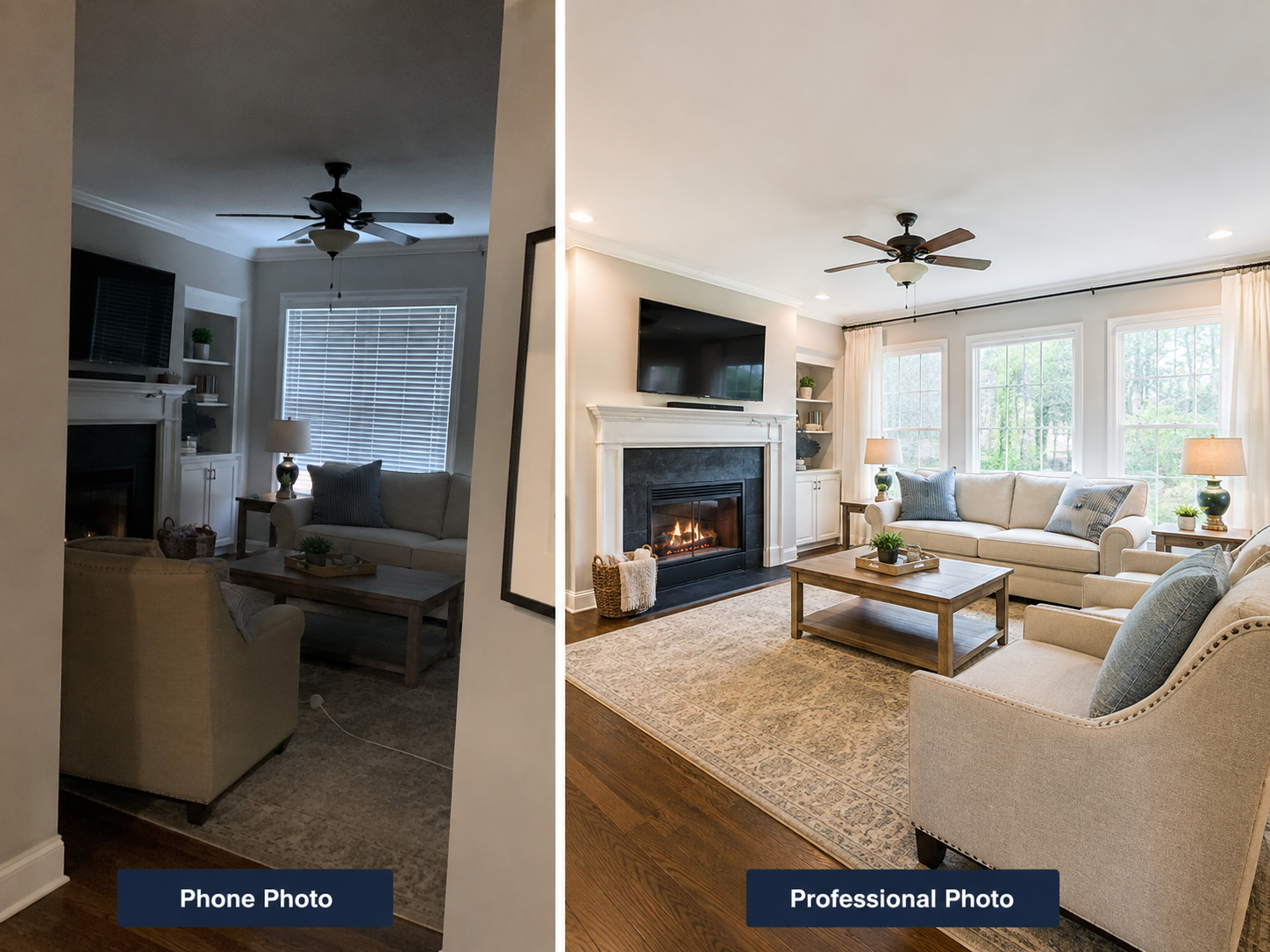 Photo orientation can make an immediate difference in how professional a real estate listing looks. Landscape photographs are generally better suited to real estate because the wider format shows more of a room, helps buyers understand the layout, and fits naturally into most real estate websites, listing galleries, and desktop screens.
Portrait photographs are sometimes appropriate for tall architectural features, but an entire listing filled with vertical images can feel inconsistent and may provide a limited view of the rooms.
This is often one of the noticeable differences between professional listing photography and quick photographs taken with a cellphone. Casual phone photos are frequently taken vertically, from standing height, with little consideration for composition or lighting. They may also show dark windows, harsh overhead lighting, shadows, crooked vertical lines, or only a narrow portion of the room.
A cellphone can take an excellent photograph, but it also has limitations when compared with the equipment available to a professional real estate photographer. A phone generally gives the person taking the photograph fewer options when choosing the ideal focal length, lens, camera position, exposure, and perspective for a particular room.
Many cellphones include wide-angle or ultra-wide cameras, but simply switching to the widest setting is not always the answer. An excessively wide view can distort a room, stretch objects near the edges of the photograph, or make the space appear different from how it actually feels in person.
A professional photographer typically has access to different lenses and more precise camera equipment that allow them to select the right perspective for each space. They can adjust the focal length, camera height, framing, exposure, and composition depending on whether they are photographing a large open-concept living area, a smaller bathroom, a kitchen, or the exterior of the property.
Professional cameras and lenses can also provide greater image quality and more flexibility when dealing with challenging lighting conditions. A photographer may use a tripod, carefully balance interior and exterior light, combine multiple exposures when appropriate, and professionally edit the final photographs so that windows, walls, furnishings, and architectural details are represented clearly.
The goal is not simply to fit as much of the room as possible into one photograph. The goal is to choose the lens, angle, lighting, and composition that present the room as effectively and accurately as possible.
A cellphone is convenient and capable, but convenience is not the same as having the range of equipment, photographic knowledge, and editing options available to a professional. Proper orientation, lighting, camera position, framing, lens selection, perspective, and editing all contribute to a more polished presentation.
Prepare the Home Before Photography Day
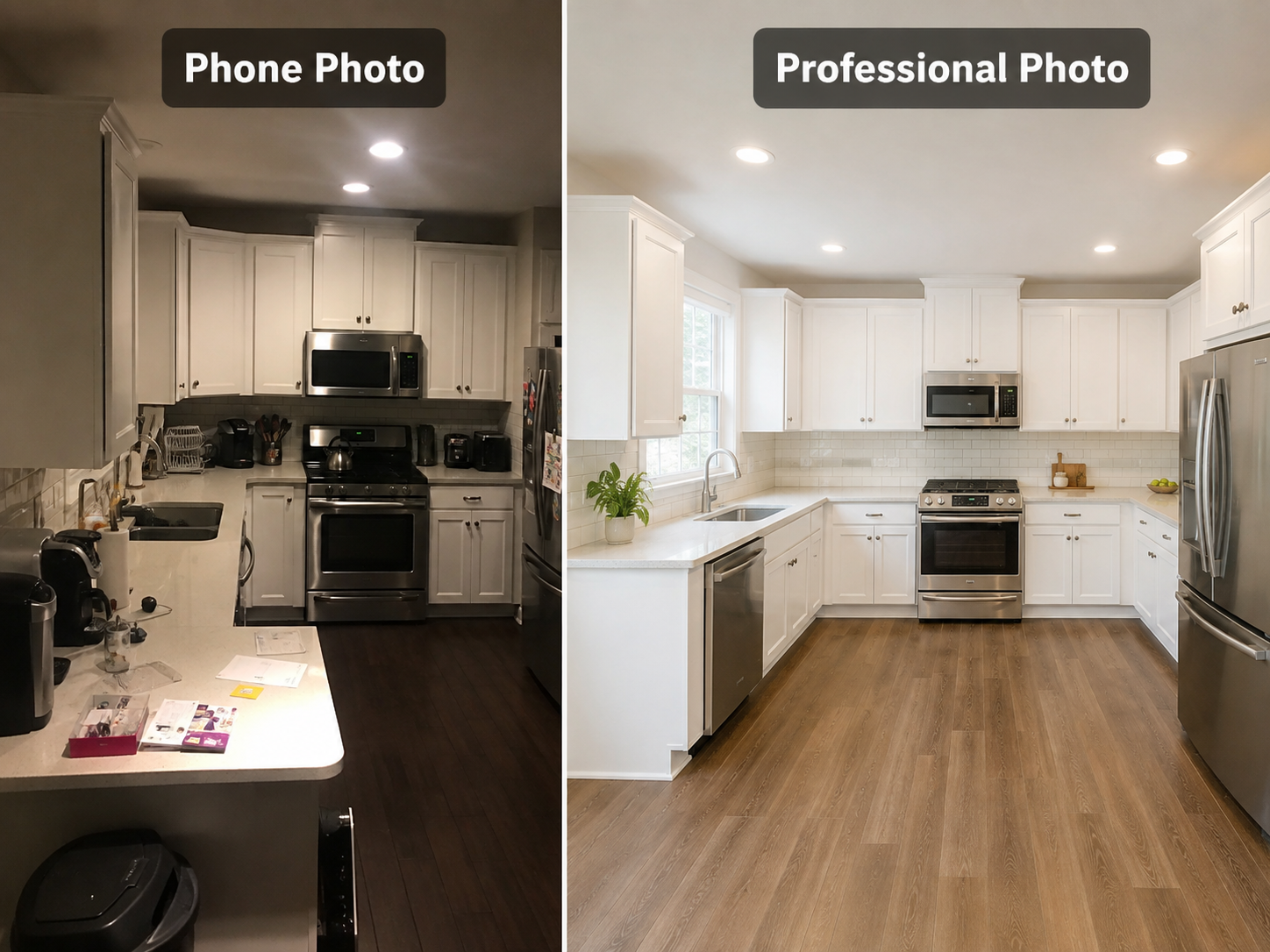 One of the easiest ways to improve listing photos costs very little: remove unnecessary items. Kitchen and bathroom counters should be as clear as possible so buyers notice the space rather than everything stored on it. Excess furniture can also make rooms appear smaller, particularly in photographs.
Before the photographer arrives, consider:
- Clearing countertops, sinks, tables, and visible surfaces.
- Removing excess furniture and highly personal items.
- Opening blinds and curtains.
- Replacing burned-out bulbs and turning on appropriate lighting.
- Cleaning windows, floors, kitchens, and bathrooms thoroughly.
- Removing pet supplies, garbage bins, cords, and other distracting objects.
- Making sure beds, towels, pillows, and furniture are neatly arranged.
The objective is not to make the home look empty or unrealistic. The objective is to make the home itself the focus.
Light Changes How a Home Feels
Lighting has an enormous influence on how buyers perceive a property. Open blinds and curtains whenever possible and allow natural light into the room. Overhead fixtures, lamps, and task lighting can then be used to complement that natural light.
A dark photograph can make a room feel smaller and dated. A properly lit photograph generally feels brighter, cleaner, and more inviting. This is another reason professional photography is so valuable. A professional understands how to balance natural and interior lighting rather than simply relying on the automatic settings of a phone camera.
This can be particularly important in rooms with bright windows. A phone taking a quick automatic photograph may expose the interior correctly while making the view through the windows extremely bright, or preserve the view outside while leaving the room looking dark. A professional photographer has more control over how those different lighting conditions are captured and balanced.
Pay Extra Attention to Kitchens, Bathrooms, and the Exterior
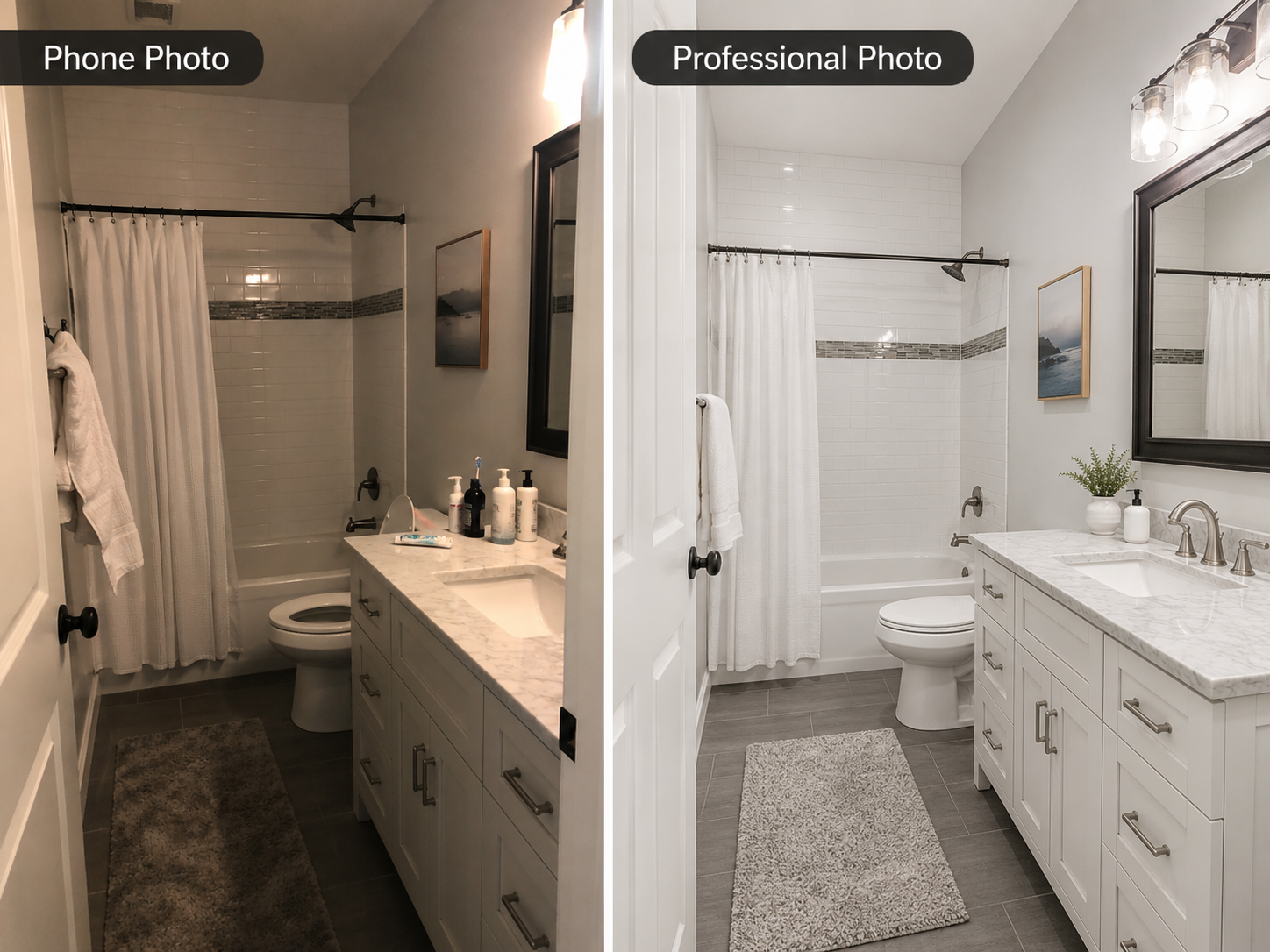
Kitchens and bathrooms deserve particular attention because buyers tend to examine them closely. Clear kitchen counters and sinks, clean appliance surfaces, close cabinet doors, and remove distracting dish towels or supplies. In bathrooms, clear the vanity, remove toiletries and cleaning products, close the toilet lid, and hang fresh towels.
Do not forget the exterior. The front photograph is often one of the first images buyers see. Move garbage and recycling bins, put away hoses and children's toys, sweep the walkway, tidy the landscaping, and make the entrance look welcoming.
Your Listing Should Give Buyers a Reason to Visit
The purpose of your online presentation is not necessarily to convince someone to buy the home from the photographs alone. Its job is to make buyers think, "I want to see this house."
A beautiful home can be overlooked when poor photographs make it appear dark, cramped, or cluttered. At the same time, a relatively ordinary home can become much more appealing when it is clean, bright, thoughtfully prepared, and professionally photographed.
That is why the photography used to market your home should not be an afterthought. When interviewing or selecting an agent, ask how your home will be photographed, whether a professional real estate photographer will be used, and how the property will be presented online.
Remember: buyers do not necessarily decide online that they are going to buy your home. They decide whether your home is worth visiting.
Before the first buyer walks through your front door, make sure everything they see online gives them a reason to want to.